
🐻 Real Examples: Surviving a Bear Market with Whisber
Every trader loves the bull market — prices rising, confidence growing, profits flowing.
But it’s the Surviving a Bear Market that truly test your discipline, patience, and emotional control. 😤📉
That’s where Chuchotement shines.
Our AI trend system isn’t built just for chasing pumps — it’s built to protect your capital, guide your timing, and keep you calm when the market turns red. ❤️🔥
Let’s walk through how Whisber helps users Surviving a Bear Market— and even thrive — during bear markets.
🧠 1. Seeing the Downtrend Before Everyone Else
Most traders only realize it’s a bear market after it’s too late — when prices have already crashed.
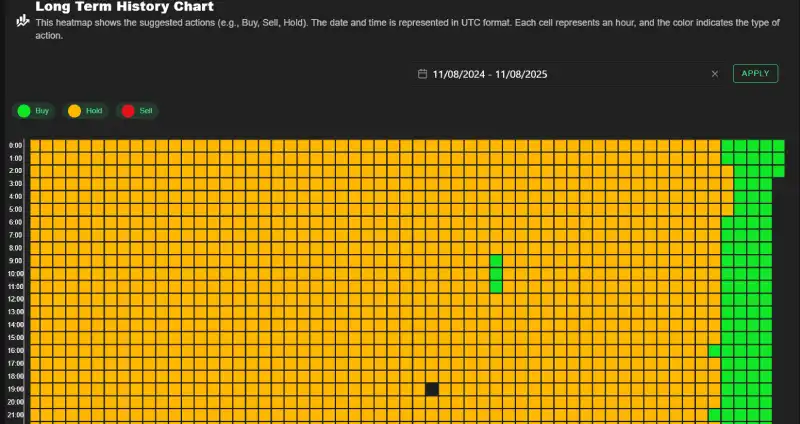
Chuchotements Long-Term Trend Heatmap et AI Gauges detect downtrend signals early, long before social media panic starts.
Exemple:
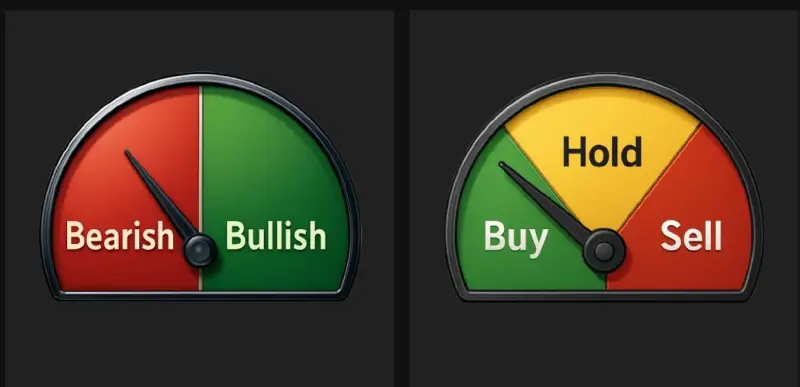
📊 When the Long-Term Dashboard turns from 🟢 Bullish to 🔴 Bearish, and the Short-Term also confirms 🔴, that’s your AI alert saying:
“The tide is turning. Protect your capital.”
Instead of holding and hoping, Whisber users start adjusting early — reducing exposure and waiting for strength to return.
✅ Result: Capital preserved. No panic selling.
⚙️ 2. Using “Suggested Actions” to Stay Calm
During bear markets, emotions swing wildly — fear, regret, revenge trading.
Whisber simplifies your choices with one line of guidance:
- 🔴 Vendre — “The trend is weakening, secure your profits.”
- 🟡 Prise — “Market uncertain, stay patient.”
- 🟢 Acheter — “Recovery signs appearing, prepare to re-enter.”
This keeps decisions objective, not emotional.
💡 You don’t need to time the exact bottom. You just need to follow the trend data calmly.
📈 3. Short-Term Trend as Your Early Recovery Signal
Even in Surviving a Bear Market, there are short-term rallies — mini uptrends that can help you rebuild or scalp profits safely.
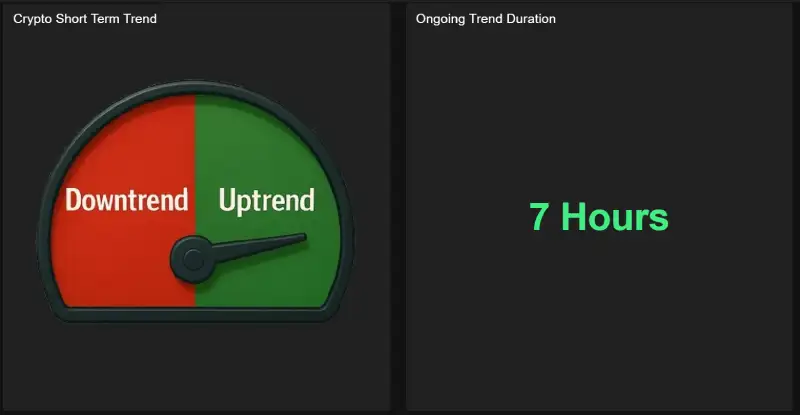
Chuchotements Short-Term Trend Heatmap shows when momentum starts shifting green again 🟢.
Exemple:
If the market has been 🔴 for weeks but the Short-Term flips 🟢 and holds for several hours, it could mean:
“A short-term bounce is forming — but wait for Long-Term confirmation before going big.”
✅ Result: You catch recovery waves safely without getting trapped in fake breakouts.
🛡️ 4. Protecting Capital While Staying Ready
Whisber’s AI doesn’t just tell you when to buy — it tells you when not to trade.
During strong bearish cycles, the system might show consistent 🔴 “Sell” or “Downtrend” signals.
That’s your green light to do nothing — and that’s often the smartest move.
While others panic trade, Whisber users simply monitor the data, letting the AI guide them on when the storm is finally over. 🌧️➡️🌤️
💪 5. Turning Survival into Strategy
Bear markets aren’t permanent — they’re opportunities to prepare.
By following Whisber’s signals, you’ll know exactly when the next uptrend begins, because:
- Long-Term turns 🟢
- Short-Term confirms 🟢
- Suggested Action switches to Buy / Hold
At that moment, Whisber users are already positioned — while others are still afraid to re-enter.
🧩 Real-World Example Summary
| Market Phase | Whisber Signal | Action | Result |
|---|---|---|---|
| 🔴 Sharp decline starts | Bearish / Sell | Reduce exposure, protect profits | Avoided losses |
| 🟡 Sideways / Unclear | Prise | Wait for confirmation | No emotional trades |
| 🟢 Early recovery | Uptrend detected | Gradual re-entry | Ride next wave safely |
2) Example A — “Capital First”: Riding the Downtrend Safely
Scenario: Long-Term flips Bearish on BTC and stays red for weeks.
Dashboard:
- Gauge: Bearish
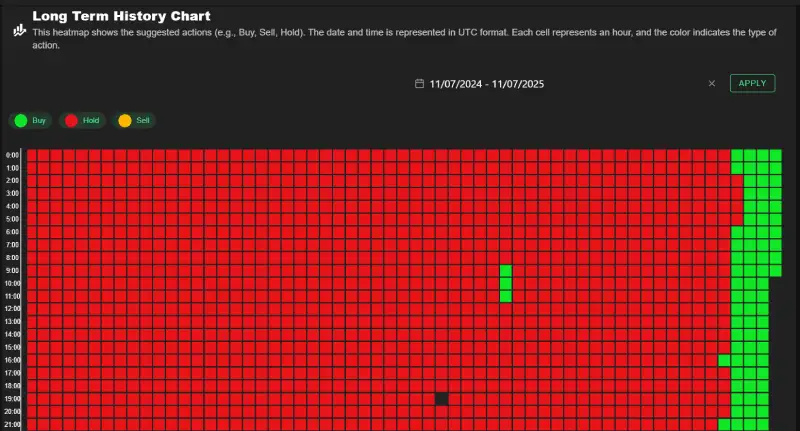
- Heatmap: long red wall with occasional 1–2 green blips
- Short-Term duration: frequently rising on red (momentum down)
Plan:
- Exit/trim longs on the Vendre call.
- Stay flat until Short-Term shows 3–6 green in a row et Long-Term softens to Neutral/Bullish.
Why it works: You avoid death-by-a-thousand-cuts from every “mini bounce.” You only wake up for persistence, not noise.
Numbers (illustration):
- Account $1,000 → risk 1% = $10
- If you short: Entry $100, Stop $101 (distance $1) → size = 10 units
- Partial profit at +1.0%, scale again at +2.0%, keep a small runner while Short-Term stays red
3) Example B — “Countertrend, But Controlled”
Scenario: Long-Term still Bearish, but Short-Term prints 6 green in a row (a bounce).
Dashboard:
- Gauge: Short-Term Tendance haussière; Duration = 6h
- Heatmap: green cluster after a long red wall
Plan (small size only):
- Take a toe-dip long with half risk, stop under latest swing low.
- Targets tight: TP1 +0.8%, TP2 +1.8%, exit remainder on red flip.
Why it works: You respect the bear regime (small size), but you can harvest structured bounces without FOMO.
Numbers:
- Risk 0.5% = $5 max loss
- Entry $50, Stop $49.60 (distance $0.40) → size = 12 units
- TP1 $50.40 (sell 6), TP2 $50.90 (sell 5), keep 1 runner; flip to 🔴 = exit
4) Example C — “The Turn”: Spotting a Real Regime Change
Scenario: After months red, the heatmap shifts from red wall → green wall, and the Long-Term gauge moves from Bearish → Bullish.
Dashboard:
- Heatmap: 24–72h of mostly green
- Gauge: Long-Term Bullish, Short-Term Tendance haussière with rising duration
- Suggested Action: Buy/Hold
Plan:
- Start a core position (normal size).
- Add on pullbacks while Short-Term remains 🟢.
- Trail stops under higher swing lows; scale out into strength.
Why it works: You waited for confirmation (clusters + Long-Term flip), not the first green dot. That saves you from false bottoms.
FAQ
Should I DCA during bears?
Only if your Long-Term plan says so and you accept drawdown. For trading, use signals, not calendar.
How do I know if the bottom is real?
Look for persistence: green clusters for days + Long-Term gauge turning Bullish. Single blips are traps.
Can I just stay in cash?
Yes. That’s a valid bear-market strategy. Set alerts so you’re notified when a real turn arrives.